The End-to-End Design Process
Easier said than done
About 12 months ago, it finally came to me – graphic design for marketing and advertising as the first touch point for brands, if done well, creates friction. It makes the customer stop, take notice, and ideally, make a movement towards that brand or whatever the marketing is highlighting.
Conversely, as that same customer enters the brand journey, the CX and UX of that same brand should become as effortless as possible, with fractional brand reinforcement to retain any inherent brand trust. Taking both these to the extreme, we actually have two opposing directions – stopping on the one hand and total smoothness on the other. Both are aspects of design. Getting these two to work together is what we could call the "dance" of design.
It leads me to the overarching principles of end-to-end design. I would like to add a caveat at this stage that this framework or way of working and thinking is definitely easier said than done, and that it's not the only "end-to-end" process in design, but rather one relating to first touch point through to product delivery. What I'm now coming to realise after working on a range of projects across industries is that the people who bring this process, continual focus on keeping customers front of mind and being able to step into their shoes is what can be the difference of a glue like working group or a fragmented mix of people.
The 5 Core Clusters
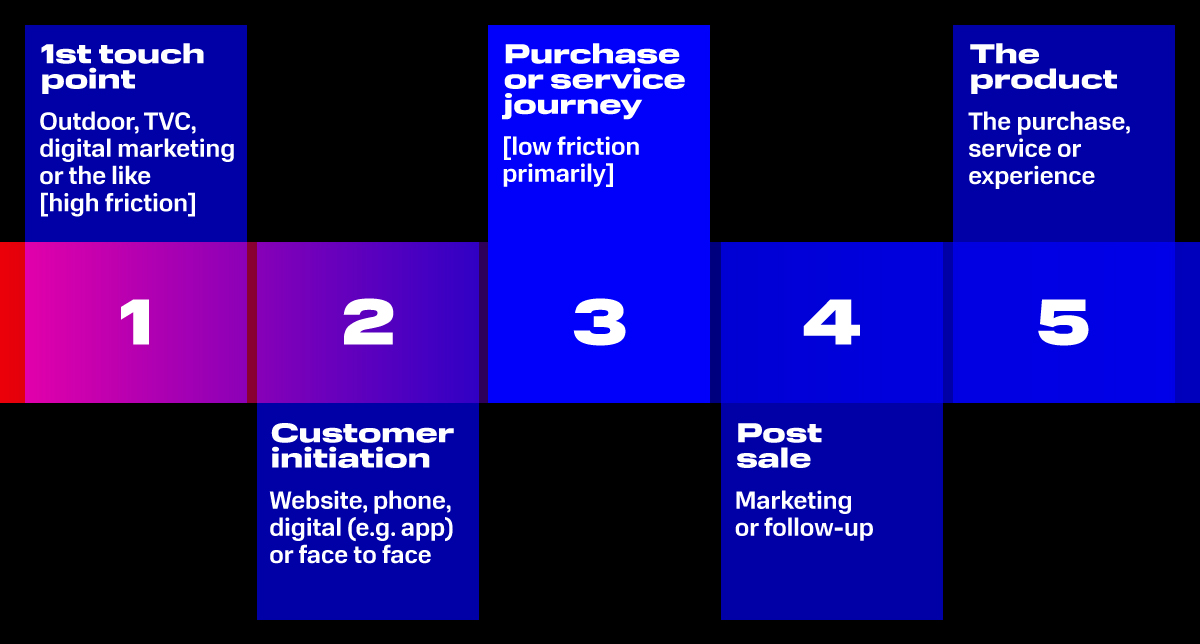
At a high level, I can isolate these 5 core clusters:
- The first touch point – aka outdoor marketing, TVC, digital marketing or the like [high friction]
- The customer initiated engagement – whether via website, phone, another digital medium (like an app) or face to face
- The purchase or service journey itself [low friction primarily]
- The post sale marketing or follow up
- The actual purchase, service or experience itself
Within those 5, we have branded elements, both physical design assets and team member engagement with customers.
It's not just about beautiful design, which I am rather partial to. I would think for most customers, there is a subtle brand trust that happens at all those steps.
It's important because that trust that's progressively built should effectively reduce friction in the buying journey, because it's being reinforced and demonstrated throughout.
Interestingly, those little glitches we sometimes see and elements of the flow that "break" the journey can also erode brand trust, which is where a designer with a strategic vision and the ability to communicate these kinds of big and small principles to team members is crucial.
It’s not design for design’s sake – it’s because good design will stop you in your tracks in a good way, and functional design will get you on your way, maybe without even noticing.
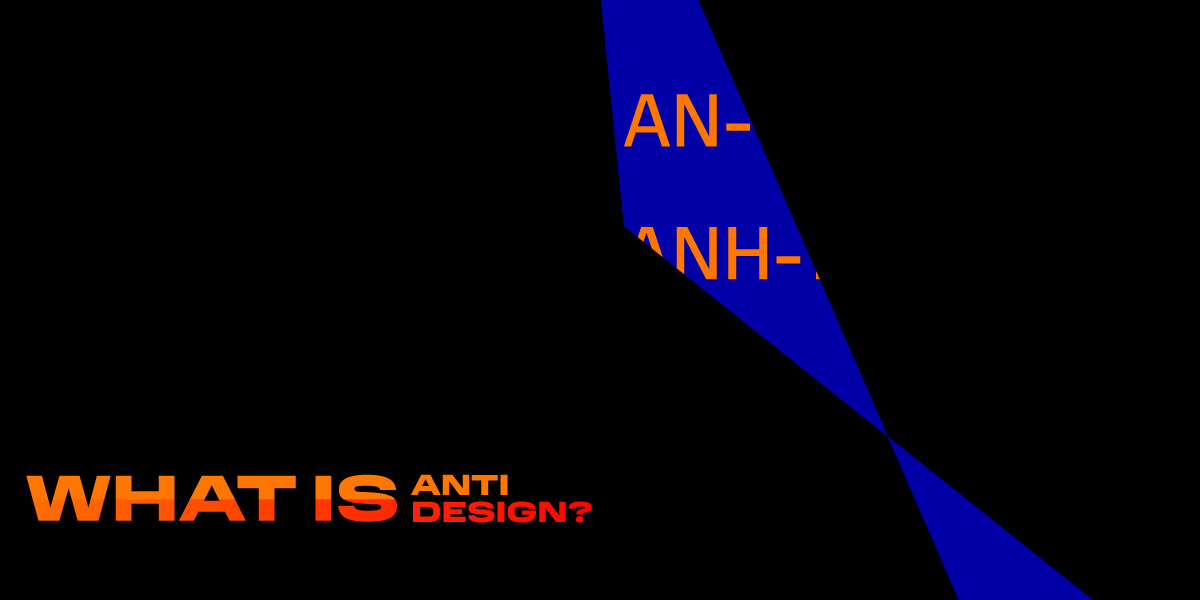
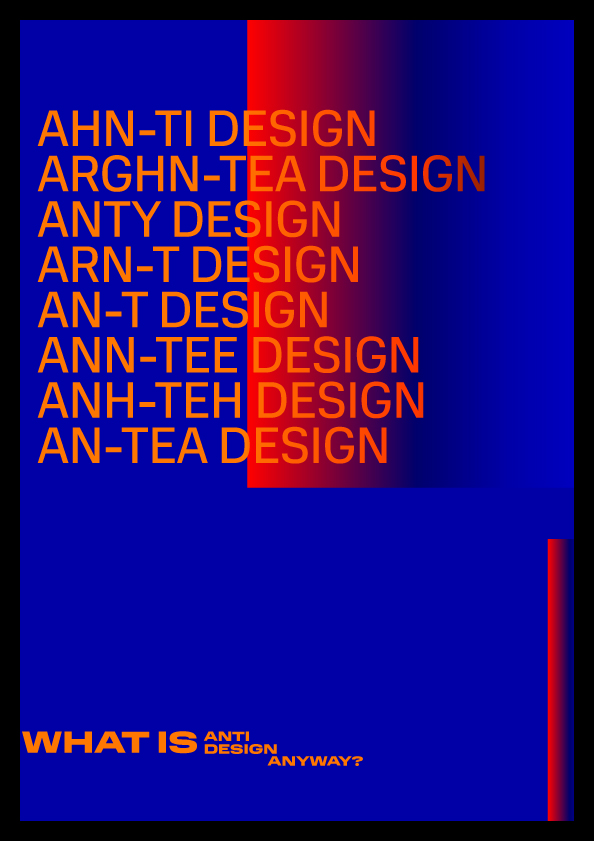
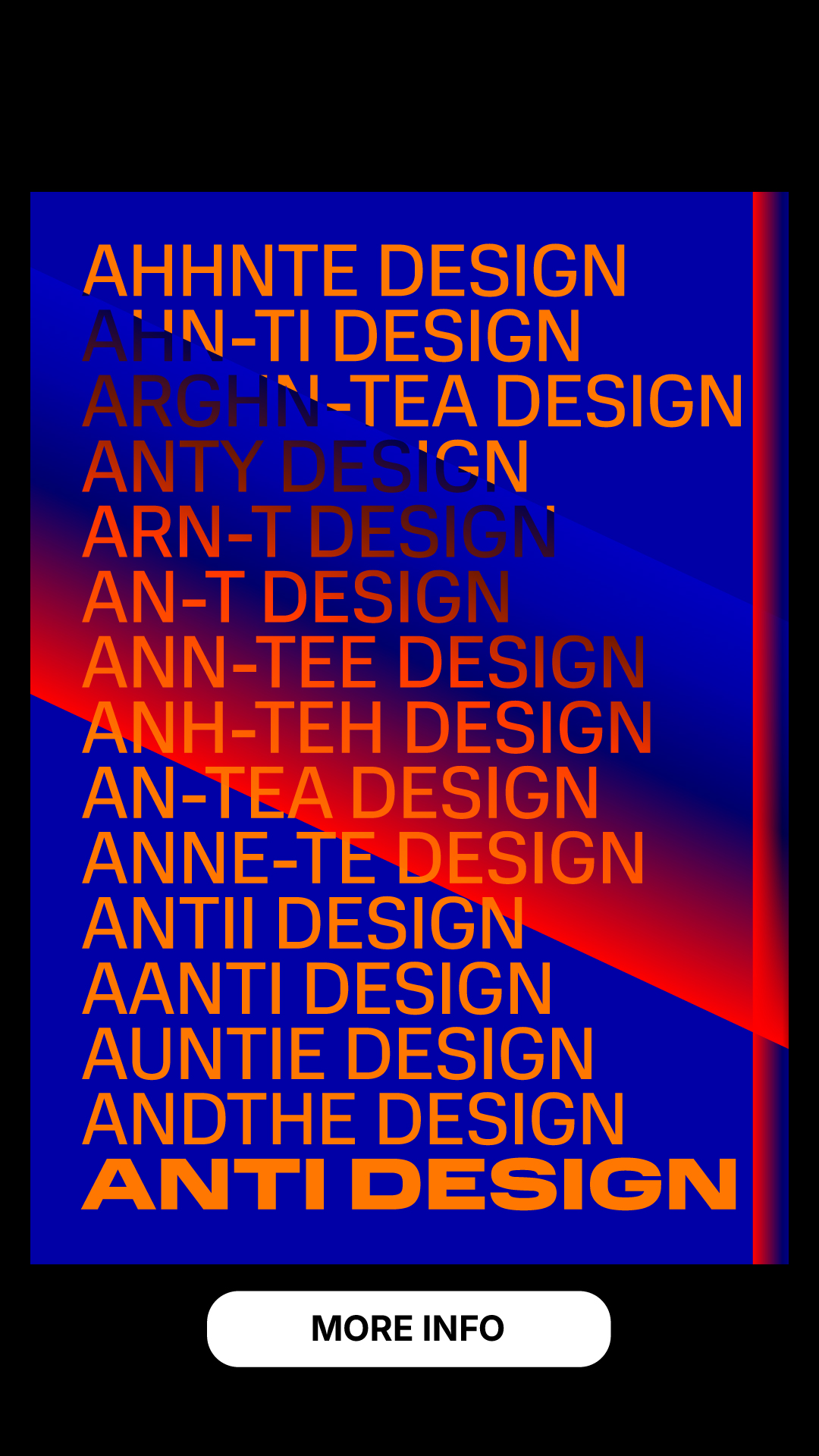
Looking at the mock pieces so far, we can see the progression from an outdoor style billboard, carried through to a poster using a few more aspects of the same branding, and then being referenced again in a social media style ad which would allow a customer to link through to the purchase journey.
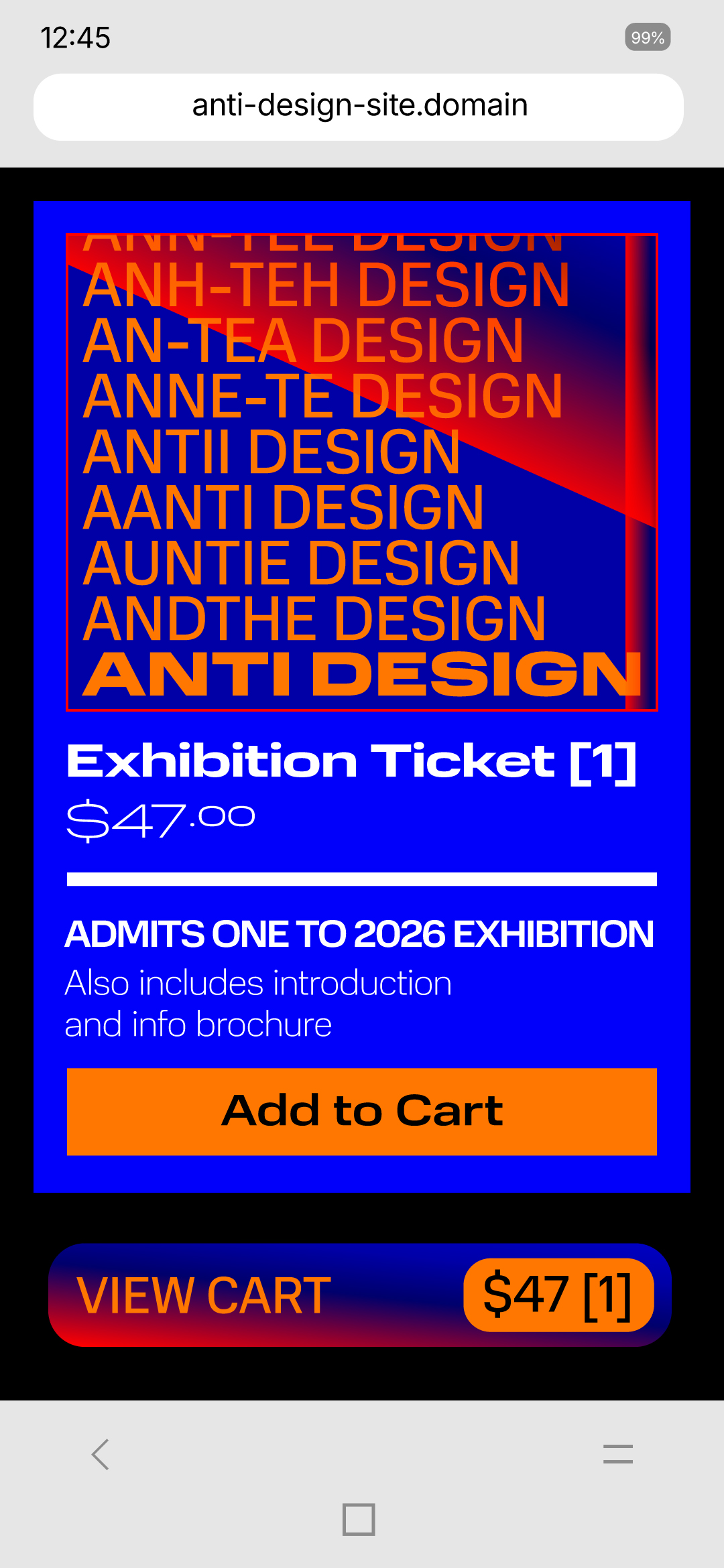
We can maintain the same branding colours and styling into the digital journey. I think this is where the rubber hits the road for the continuity.
It's here where I think it's important to reduce the friction by making use of the graphics already shown in the advertising, subtly reinforcing trust that's already been partially established.
However, it's also at this point where a broken UX or buggy interface could break the experience for the customer. I could go on about platform experience and monitoring but that's a whole different conversation.
If the customer goes ahead, we have an opportunity to close the loop on the whole design and customer experience journey, re-capping to them in a continued visual way through an EDM or other marketing.
If it were a real event, I would think brochures, event posters or other assets and collateral would build beautifully off these initial pieces.
What I think is interesting too when I think forward to other collateral is just how clearly a brand can grow from the first seen point through to the experience or delivered product.
They're almost like fun little seeds of reference that can balance both continuity but constrast in variation along the process.
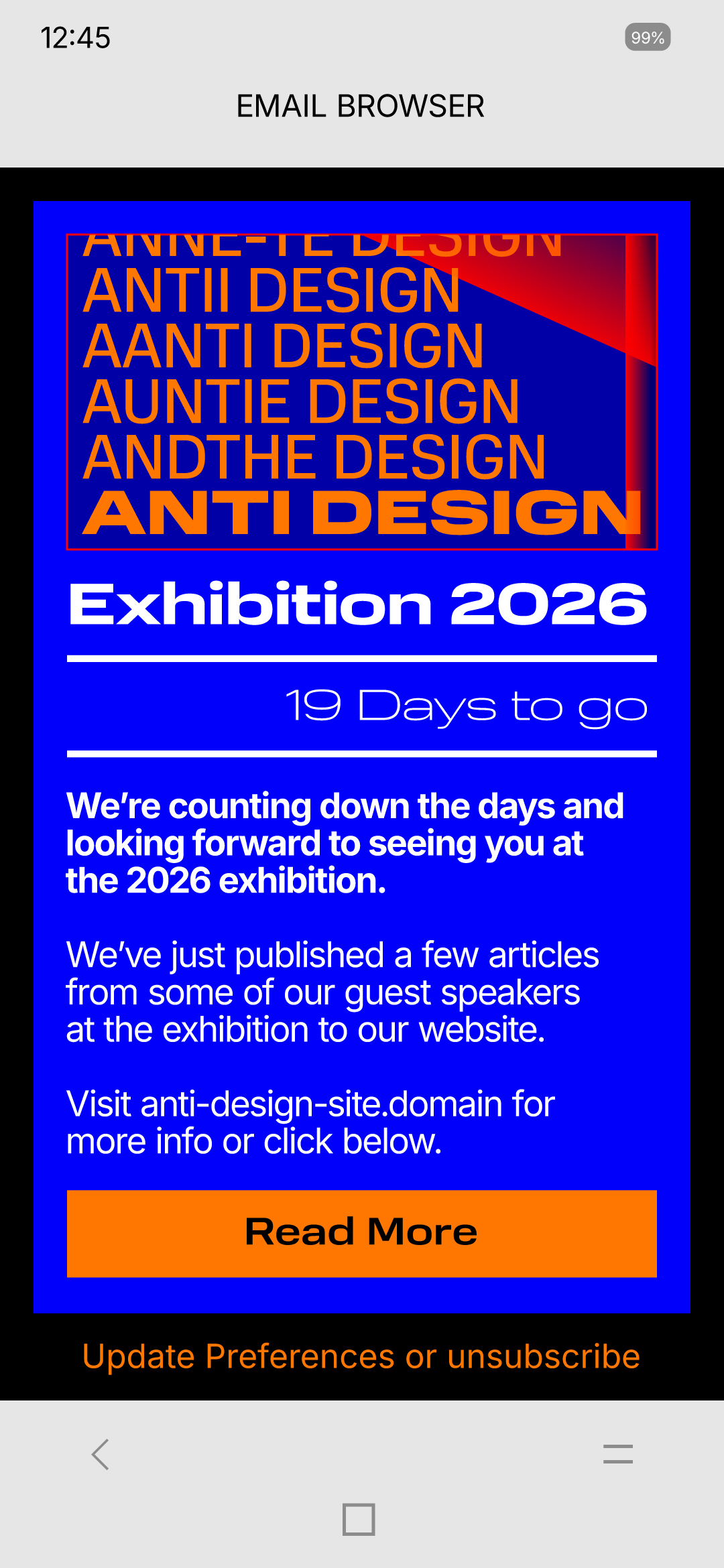
This 5-step framework isn't just about selling tickets – it's about building a consistent and resilient journey which is carried the whole way through the process, from graphics through back-end systems, whether in my new AgTech focus or beyond.